

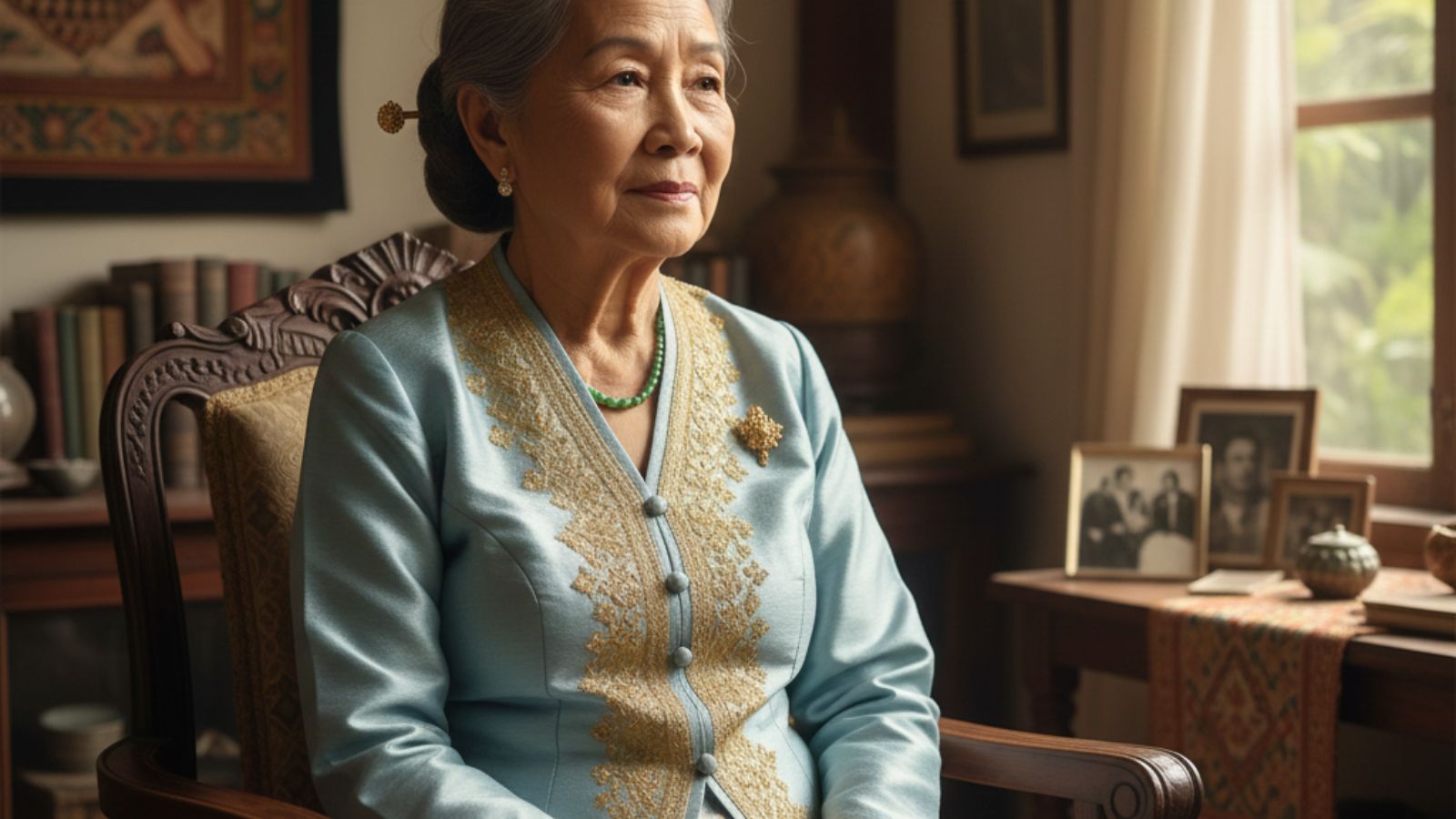
Tin Swe Thant’s life story is one of resilience, cultural navigation, and lasting influence. Though she has never sought the spotlight, her journey—from Burma (now Myanmar) to the United States—has shaped not only her own destiny but also the worldview of the next generation. Best known as the mother of journalist Alex Wagner, Tin Swe Thant represents a broader immigrant experience defined by courage, adaptation, and quiet strength.
Early Life in Burma: Roots of Strength
Tin Swe Thant was born in Burma during a period of political uncertainty and social transformation. Growing up in a traditional society shaped by hierarchy, colonial aftermath, and emerging nationalism, she learned early the value of discipline and perseverance. Her upbringing emphasized respect for elders, education, and moral responsibility—values that would later guide her life abroad.
Life in Burma was not easy, particularly for young women with intellectual ambition. Yet these early challenges forged Tin Swe Thant’s inner strength and adaptability, preparing her for the larger transitions that lay ahead.
The Name Change: A Childhood Wound that Became a Strength
One of the most formative moments in Tin Swe Thant’s early life was being compelled to change her name as a child. In many cultures, a name is deeply tied to identity, heritage, and belonging. Losing that connection was painful, leaving a lasting emotional imprint.
Over time, however, this experience became a source of resilience. Tin Swe Thant learned that identity could be preserved internally, even when external markers were altered. This lesson—of holding onto selfhood amid change—would define her approach to immigration, motherhood, and cultural integration.
The Bold Move to America: Embracing Opportunity & Change
Tin Swe Thant’s decision to move to the United States was both courageous and transformative. Leaving behind family, language, and familiarity, she embraced uncertainty in pursuit of education and opportunity. Like many immigrants, she arrived with limited resources but an unshakable belief in hard work and learning.
America presented both promise and challenge. Cultural misunderstandings, subtle prejudice, and homesickness tested her resolve. Still, Tin Swe Thant persevered, carving out a life that blended her Burmese heritage with her new American reality.
Education at Swarthmore: Shaping a Voice, Shaping a Vision
Education played a central role in Tin Swe Thant’s transformation. Her time at Swarthmore College exposed her to rigorous academic debate, political thought, and global perspectives. It was here that she refined her intellectual voice and developed a deeper understanding of social justice, history, and power.
Swarthmore also provided a space where Tin Swe Thant could exist beyond labels—neither defined solely by her immigrant status nor constrained by cultural expectations. This experience reinforced her belief in education as a tool for empowerment.
Meeting Carl Wagner: Two Cultures, One Family
During her time in the United States, Tin Swe Thant met Carl Wagner. Their relationship symbolized the merging of two cultures, two histories, and two worldviews. Together, they built a family rooted in mutual respect and curiosity rather than uniformity.
Their partnership demonstrated that cultural differences need not divide; instead, they can enrich family life when approached with openness and empathy.
Motherhood and Cultural Fusion: Raising a Future Journalist
As a mother, Tin Swe Thant emphasized awareness, compassion, and critical thinking. Raising her daughter in a multicultural household, she encouraged questions about identity, power, and belonging. Stories of Burma, personal experiences with displacement, and observations of American society all became part of daily life.
This cultural fusion played a significant role in shaping her daughter’s intellectual curiosity and eventual career in journalism. Tin Swe Thant did not push ambition; she modeled integrity and thoughtful engagement with the world.
The Diner Incident: A Quiet Moment with Loud Implications
One often-referenced moment in Tin Swe Thant’s life is a subtle incident at a diner, where she experienced casual discrimination. Rather than reacting loudly, she responded with quiet dignity. The moment left a deep impression, illustrating how prejudice often operates quietly—and how resilience can be equally understated.
This experience became a teaching moment about racism, visibility, and the emotional labor of immigrants navigating public spaces.
Influence on Alex’s Career and Voice
Tin Swe Thant’s influence on her daughter’s career is profound. Her lived experiences—migration, cultural negotiation, and political awareness—helped shape a journalistic voice attentive to nuance and humanity. Rather than offering directives, she offered perspective.
Through example, Tin Swe Thant taught the importance of asking hard questions while maintaining empathy.
Grandmotherhood: A Legacy Carried On
As a grandmother, Tin Swe Thant’s legacy continues in quieter ways. Her stories, values, and presence connect younger generations to a broader history that spans continents. She embodies continuity—proof that personal history matters, even when it is not widely known.
Social Media and Modern Presence: Quiet but Resonant
Unlike many public figures associated with media families, Tin Swe Thant maintains a minimal social media presence. This choice reflects her lifelong preference for substance over visibility. When she does appear indirectly—through reflections or anecdotes—her influence resonates precisely because of its restraint.
Beyond One Family: A Story of Many Immigrants
The story of Tin Swe Thant is not unique, yet it is deeply representative. Her journey mirrors that of countless immigrants who leave home, reshape identity, and quietly contribute to their adopted countries. Her life underscores how cultural bridges are often built not by institutions, but by individuals.
Lessons from Tin Swe Thant’s Life
Tin Swe Thant’s life offers enduring lessons: resilience without bitterness, identity without rigidity, and influence without ego. She reminds us that strength can be quiet, and that the most profound impacts are often unseen.
Where Is She Today?
Today, Tin Swe Thant lives largely out of the public eye, focusing on family and personal reflection. Her story continues not through headlines, but through the values she has passed on.
Conclusion
Tin Swe Thant’s life is a testament to the power of perseverance, cultural integrity, and quiet influence. From Burma to America, from student to mother and grandmother, her journey reflects the complexity of immigrant identity and the enduring strength found in adaptation. In understanding Tin Swe Thant, we gain insight not only into one remarkable woman, but into the shared story of many.
