

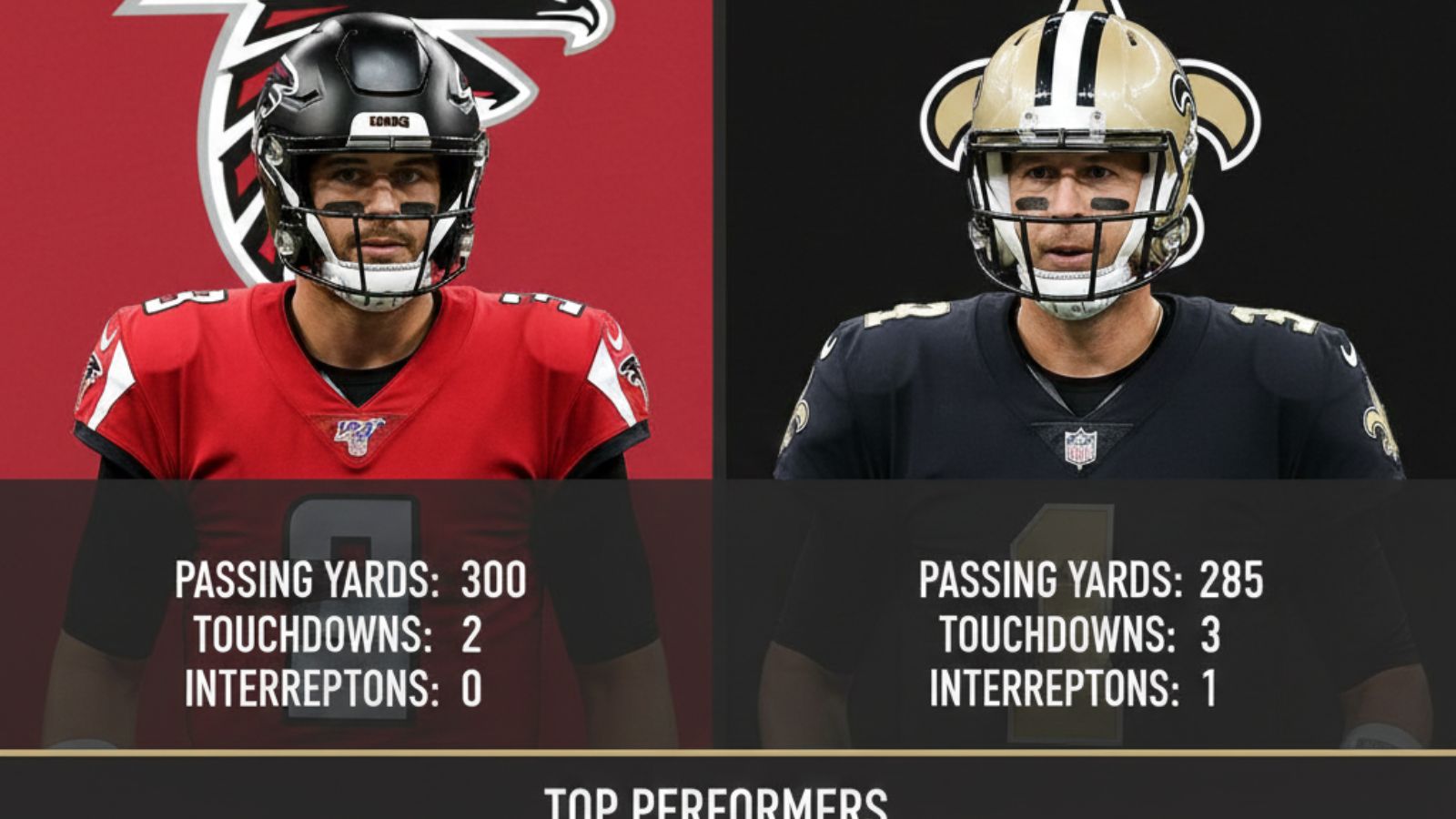
The NFC South rivalry between the Atlanta Falcons and New Orleans Saints always delivers intense football action, and analyzing the player statistics from their matchups reveals the competitive nature of this storied division battle. This comprehensive breakdown examines the individual performances that shaped the outcome of this crucial contest.
Quick Match Overview
The Falcons-Saints rivalry represents one of the NFL’s most heated divisional matchups, where every statistical category matters in determining the winner. These teams know each other intimately, making individual player performances even more critical to success. The latest encounter showcased the tactical chess match between two franchises fighting for playoff positioning in a competitive NFC South division.
Starting Lineups and Key Players
The Atlanta Falcons entered the match with their offensive weapons primed for action. The quarterback position commanded attention, with decision-making and accuracy proving crucial against the Saints’ aggressive defensive scheme. The receiving corps featured dynamic playmakers capable of stretching the field vertically and creating mismatches in the intermediate passing game.
For the New Orleans Saints, their starting lineup emphasized physical play on both sides of the ball. The Saints’ offensive identity centered around balanced attack principles, mixing run and pass effectively to keep defenses honest. Their defensive front seven brought intensity and experience, creating pressure situations that tested Atlanta’s offensive line throughout the contest.
Quarter-by-Quarter Performance Analysis
The opening quarter typically sets the tone in Falcons-Saints matchups, with both teams testing opponent tendencies. The first fifteen minutes often feature conservative play-calling as coaches gauge defensive alignments and player matchups.
Second quarter adjustments become critical as offensive coordinators exploit weaknesses identified early. Teams that establish rhythm before halftime gain significant psychological advantages heading into locker rooms.
The third quarter frequently determines game outcomes in this rivalry. The team making superior halftime adjustments often seizes control of momentum and field position. Fourth quarter execution separates winners from losers, with player statistics in crunch time revealing who performs under pressure.
Star Performers of the Match
Individual brilliance often decides closely contested divisional games. Quarterbacks face immense pressure to make clutch throws while managing the game clock effectively. Their completion percentages, yards per attempt, and touchdown-to-interception ratios tell the story of offensive efficiency.
Skill position players who create separation and make contested catches become difference-makers. Running backs who break tackles and convert short-yardage situations keep drives alive and help control game tempo. Wide receivers who win one-on-one matchups stretch defenses and create scoring opportunities.
Defensive standouts who generate turnovers or create negative plays disrupt offensive rhythm. Edge rushers recording multiple sacks force opponents into obvious passing situations. Defensive backs who limit yards after catch and prevent explosive plays preserve leads in critical moments.
Passing Game Statistics
Quarterback statistics provide the clearest window into offensive effectiveness. Completion percentage indicates accuracy and decision-making under pressure, while yards per attempt reveals aggressive downfield attacking or conservative checkdown reliance. Touchdown passes demonstrate red zone efficiency and playmaking ability.
The Saints’ passing attack traditionally emphasizes timing routes and precise ball placement, maximizing yards after catch through scheme design. Atlanta counters with vertical concepts that challenge safeties deep and create explosive play potential. Comparing quarterback ratings between these signal-callers highlights which offense controlled the game tempo.
Rushing Game Statistics
Ground game statistics often determine time of possession advantages. Total rushing yards indicate offensive line dominance and running back vision. Yards per carry efficiency separates patient runners who hit designed gaps from explosive backs who create on broken plays.
The team establishing rushing consistency forces opponents to commit extra defenders to stopping the run, opening play-action opportunities. Rushing touchdowns reflect goal-line package effectiveness and short-yardage conversion ability.
Receiving Game Statistics
Individual receiver statistics showcase which passing game weapons impacted the outcome most significantly. Total reception numbers indicate target share and quarterback trust. Receiving yards reveal who created separation and gained yards after catch effectively.
Touchdown receptions highlight red zone threats and playmakers who convert scoring opportunities. Average yards per reception distinguishes possession receivers from deep threat specialists. Tight ends who exploit coverage seams become safety valves in critical third-down situations.
Defensive Highlights and Key Tackles
Defensive statistics tell the story of which unit imposed its will physically. Total tackles indicate defensive presence and pursuit angles. Tackles for loss demonstrate gap discipline and backfield penetration that disrupts offensive timing.
Sacks pressure quarterbacks into hurried decisions and negative plays that stall drives. Pass deflections show defensive backs maintaining tight coverage and contesting throws. Forced fumbles create sudden possession changes that swing momentum dramatically.
Turnovers, Penalties, and Critical Moments
Turnover differential typically predicts winners in evenly matched divisional contests. Interceptions thrown reveal quarterback decision-making under pressure or exceptional defensive coverage. Fumbles lost indicate ball security issues or violent defensive tackling creating separation.
Penalty statistics expose discipline problems that extend opponent drives or negate positive plays. False starts and holding calls kill offensive momentum, while defensive pass interference provides automatic first downs. Teams minimizing self-inflicted mistakes gain significant competitive advantages.
Red Zone Efficiency and Third-Down Conversions
Red zone touchdown percentage separates efficient offenses from those settling for field goals. Converting inside the twenty-yard line requires precise execution and creative play-calling that exploits defensive vulnerabilities in compressed spaces.
Third-down conversion rates determine sustained drive success. Offenses converting third-and-manageable situations maintain possession advantages and tire opposing defenses. Defensive units forcing three-and-outs create favorable field position and momentum shifts.
Coaching Decisions and Tactical Insights
Play-calling tendencies and fourth-down decisions reveal coaching philosophies under pressure. Aggressive coaches attacking downfield on fourth-and-short demonstrate confidence in their personnel. Conservative approaches protecting leads through clock management reflect different strategic priorities.
Timeout management and challenge decisions in critical moments often determine final outcomes in tightly contested rivalry games.
Conclusion
Analyzing Atlanta Falcons vs New Orleans Saints match player stats provides comprehensive insights into this intense divisional rivalry. Individual performances in passing, rushing, and defensive categories ultimately determine which team claims victory. Understanding these statistical breakdowns helps fans appreciate the intricate chess match occurring between division rivals fighting for playoff positioning and conference
